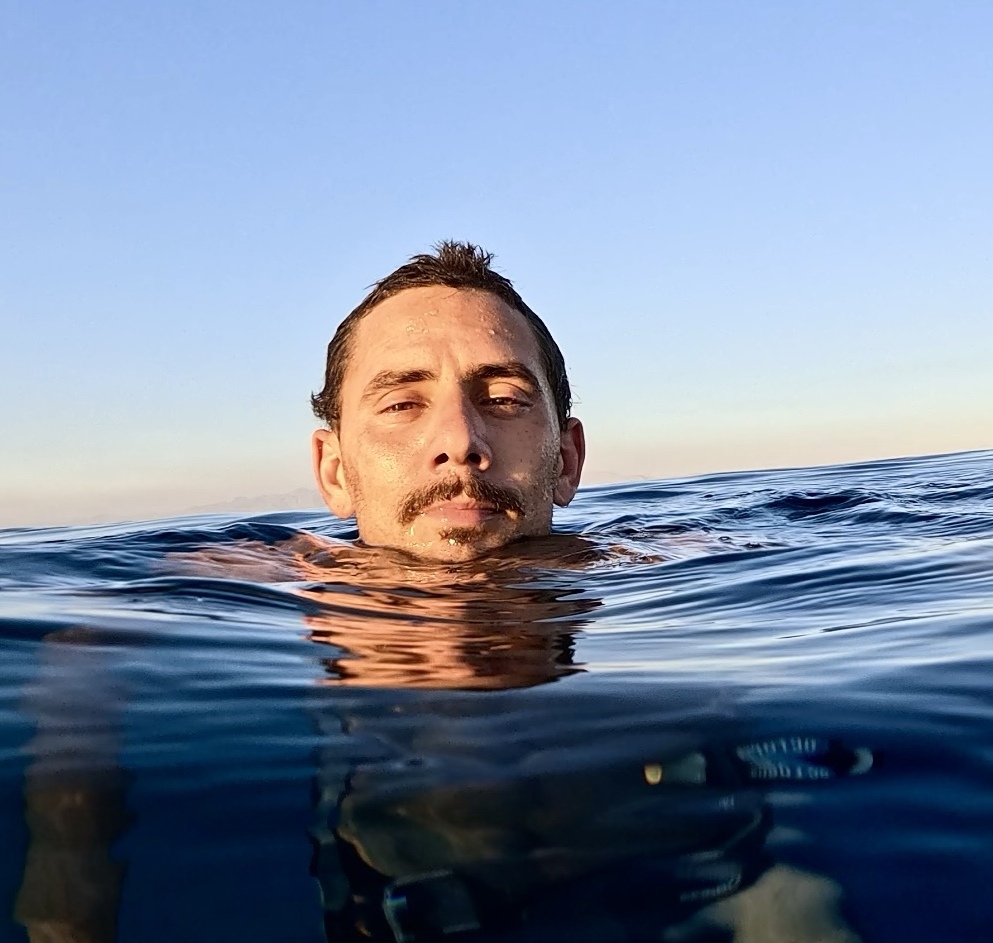
This isn't coincidence. The muscles that control your voice are the same muscles that control equalization. And the respiratory control that singers build over years of training maps directly to the breath management that freedivers spend months trying to develop.
Here's the science behind why your voice already knows how to freedive.
The Soft Palate: Where Singing Meets Frenzel
The single most important connection between singing and freediving is the soft palate — the velum. It's the flexible tissue at the back of the roof of your mouth, and it's the gatekeeper between your oral and nasal cavities.
In Frenzel equalization, you need to consciously position the soft palate to route compressed air from your mouth toward your Eustachian tubes. Most people have never voluntarily controlled this muscle in their lives. They can't feel it, can't move it on command, and spend days or weeks in equalization workshops learning to isolate it.
Singers do this every day without thinking about it.
In classical vocal technique, soft palate elevation is one of the fundamental trained skills. Singers learn to raise the velum for resonance — creating the open, spacious sound of an operatic vowel — and to lower it for nasal consonants like "m," "n," and "ng." The transition from "ng" to "ah" that every voice teacher assigns as a warmup exercise is essentially the same anatomical action as the soft palate control needed for Frenzel.
Research backs this up. Studies on vocal pedagogy have documented that trained singers develop proprioceptive awareness of the velum that most people lack entirely. They can feel where their soft palate is and move it at will. This awareness is exactly what makes Frenzel click — it's not about strength, it's about knowing the muscle exists and learning to isolate it.
The "K-spot" used in Frenzel teaching — touching the back of the tongue to the soft palate at the position of a hard "K" sound — is functionally identical to singing a velar stop. If you can sing "kah-kah-kah" with clear articulation, you already have the motor pattern for a Frenzel charge.
The Glottal Lock: Throat Singers Have an Unfair Advantage
The second component of Frenzel is the glottal lock — closing the vocal cords to seal the airway and disconnect the mouth from the lungs. This is the "throat lock" that allows you to compress air with your tongue without it escaping downward.
For most people, the glottis is something that closes reflexively when you lift something heavy or during certain speech sounds. Voluntary control is limited.
For singers, the glottis is an instrument they play every day. Vocal onset — the way a singer begins a note — requires precise glottal control. A "clean" onset means bringing the vocal folds together at exactly the right tension before airflow begins. This is the same closure used in Frenzel, just repurposed.
But the real unfair advantage belongs to throat singers. Tuvan and Mongolian khoomei (overtone singing) requires extraordinary independent control of the glottis, the false vocal folds, and the pharyngeal space. Laryngoscopic studies of throat singers have shown they can independently control structures that most people cannot voluntarily activate — including the aryepiglottic folds and ventricular folds. These are the same structures involved in advanced mouthfill technique, where maintaining a perfect glottal seal under increasing pressure at depth is critical.
If you can throat sing, you can almost certainly Frenzel. The motor control is already there.
The Diaphragm: Singing Through Contractions
Ask any competitive freediver what separates a 3-minute breath hold from a 5-minute one, and they'll say the same thing: the ability to stay relaxed through contractions. When CO2 rises and the diaphragm starts spasming, untrained divers panic. Trained divers keep the diaphragm low and let the contractions wash through them.
Opera singers train this exact skill — they just call it something different.
In Italian vocal technique, appoggio (literally "support" or "leaning") describes the practice of maintaining a lowered, engaged diaphragm during sustained singing. The singer resists the natural tendency of the diaphragm to rise as air is expelled, creating a steady, controlled column of air. Studies using EMG have shown that trained singers have significantly different diaphragmatic activation patterns compared to untrained individuals — specifically, they can independently control the diaphragm from their accessory respiratory muscles.
Research by Thomasson and Sundberg (1999) documented that professional singers maintain active diaphragmatic engagement during phonation — a "braking" action that is functionally identical to the diaphragmatic control used by freedivers to manage contractions. Other studies found that opera singers could maintain a lowered diaphragm position significantly longer than non-singers.
The parallel is almost exact. A freediver at 3:30 into a static hold, managing rhythmic diaphragmatic contractions while staying relaxed, is doing the same thing an opera singer does during a sustained fortissimo phrase — keeping the diaphragm low, letting the intercostals manage fine airflow adjustments, and not fighting the body's desire to move air.
CO2 Tolerance: Long Phrases as Breath-Hold Training
Every time a singer sustains a long phrase on a single breath, they're doing a mild form of CO2 tolerance training. The air runs low, CO2 rises, the urge to breathe intensifies — and the singer pushes through to the end of the phrase.
This isn't as intense as a freediving CO2 table, but it's cumulative. Years of singing build a baseline tolerance for the uncomfortable sensation of rising CO2 that non-singers simply don't have. Wind instrument players get the same benefit — and studies have shown that wind musicians have enhanced respiratory muscle endurance and a higher tolerance for respiratory discomfort.
The mechanism is the same one that makes CO2 tables work in freediving: repeated exposure to elevated CO2 shifts the subjective breakpoint. Your body learns that the urge to breathe isn't an emergency — it's a signal you can acknowledge and manage.
Intercostal Strength: The Hidden Advantage
Singers rely heavily on the intercostal muscles — the small muscles between the ribs — to control lung volume during performance. Classical technique emphasizes maintaining rib cage expansion even as lung volume decreases, using the intercostals to resist the chest wall's elastic recoil.
Studies have shown that classically trained singers have measurably greater intercostal EMG activity during performance tasks and greater rib cage contribution to breathing than untrained speakers.
For freediving, intercostal strength and flexibility matter for several reasons:
- Lung packing — using glossopharyngeal insufflation to load extra air requires flexible, strong intercostals
- Chest flexibility at depth — as lungs compress under pressure, flexible intercostals allow the chest wall to deform without discomfort
- Contraction management — strong intercostals help maintain rib cage stability during diaphragmatic contractions
- Recovery breathing — efficient post-dive recovery requires rapid, full rib cage expansion
Singers build all of this without ever setting foot in the water.
Chanting and the Dive Reflex
This is where it gets fascinating. A 2011 study by Kalyani et al. used fMRI to examine brain activation during Om chanting and found that it stimulated the vagus nerve — triggering parasympathetic activation. The vagus nerve is the same pathway that mediates the mammalian dive reflex: it's what slows your heart rate when your face hits cold water.
This suggests that regular chanting practice may actually train the parasympathetic response that underlies freediving bradycardia. Practitioners of kirtan, Gregorian chant, Vedic recitation, or even sustained group singing may be inadvertently strengthening the same vagal tone that elite freedivers develop through years of water training.
The research is still emerging, but the implication is striking: chanting doesn't just train your muscles for freediving — it may train your nervous system for it too.
Bhramari pranayama (bee breath) — sustained humming with glottal and nasal resonance — is particularly interesting. The humming creates positive pressure in the nasopharynx, functionally similar to a gentle Frenzel maneuver. Regular practitioners may be training Eustachian tube opening without knowing it.
The Didgeridoo Connection
Circular breathing — the technique used to play the didgeridoo without pausing for breath — deserves special mention. It requires independent control of the soft palate, cheek muscles (buccinator), and airway that maps directly to mouthfill equalization.
In circular breathing, you store air in your cheeks while simultaneously inhaling through your nose, using the soft palate as a valve to separate the two airstreams. In mouthfill equalization, you store air in your mouth with a closed glottis and use the tongue and cheek muscles to push it into your ears.
The motor patterns aren't identical, but the body awareness is the same: independent control of the oral cavity as a pressure vessel, separate from the respiratory system. Some freediving coaches have specifically recommended didgeridoo playing as equalization training — and the anecdotal reports from the DeeperBlue forums suggest it works.
What This Means for You
If you sing, play a wind instrument, practice pranayama, or do any form of sustained vocalization — you likely have a head start on several of the hardest skills in freediving:
- Equalization — your soft palate awareness and glottal control give you a foundation most beginners lack
- Breath-hold comfort — your CO2 tolerance baseline is higher than average
- Contraction management — your diaphragmatic control transfers directly
- Relaxation — if you chant, your vagal tone may already be primed for the dive reflex
This doesn't mean singers automatically become great freedivers. You still need water time, depth exposure, safety training, and proper instruction. But it does mean the learning curve is often shorter — and the frustrating "equalization wall" that stops many beginners may not apply to you.
If you've been singing your whole life and wondering whether freediving might be for you: your body has been preparing for this longer than you think. The same instrument that produces your voice is the instrument that lets you descend on a single breath.