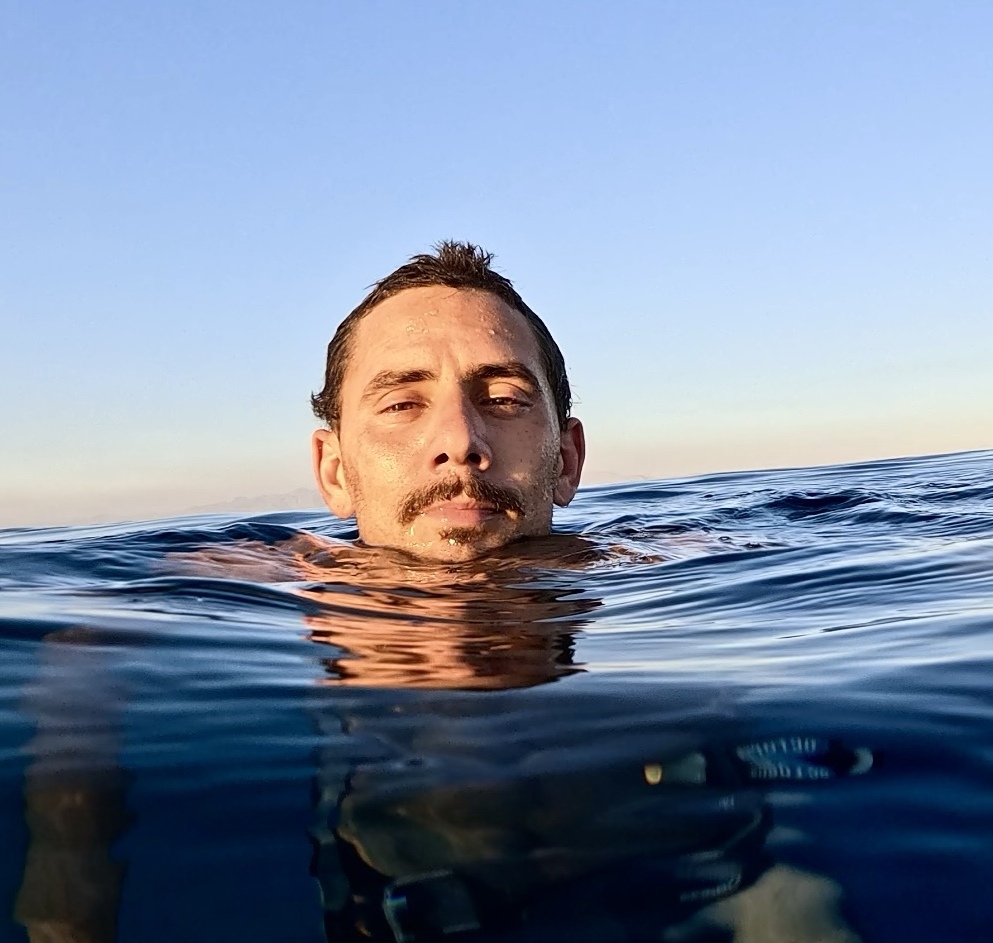
This is the mammalian dive reflex — an ancient physiological response shared by every air-breathing vertebrate on earth, from seals to humans to laboratory rats. It was first described by Edmund Goodwyn in 1786 and later characterized by Paul Bert in 1870, but freedivers have been benefiting from it for thousands of years without knowing the science behind it.
Understanding this reflex won't just make you a better freediver. It'll change the way you think about what your body is capable of.
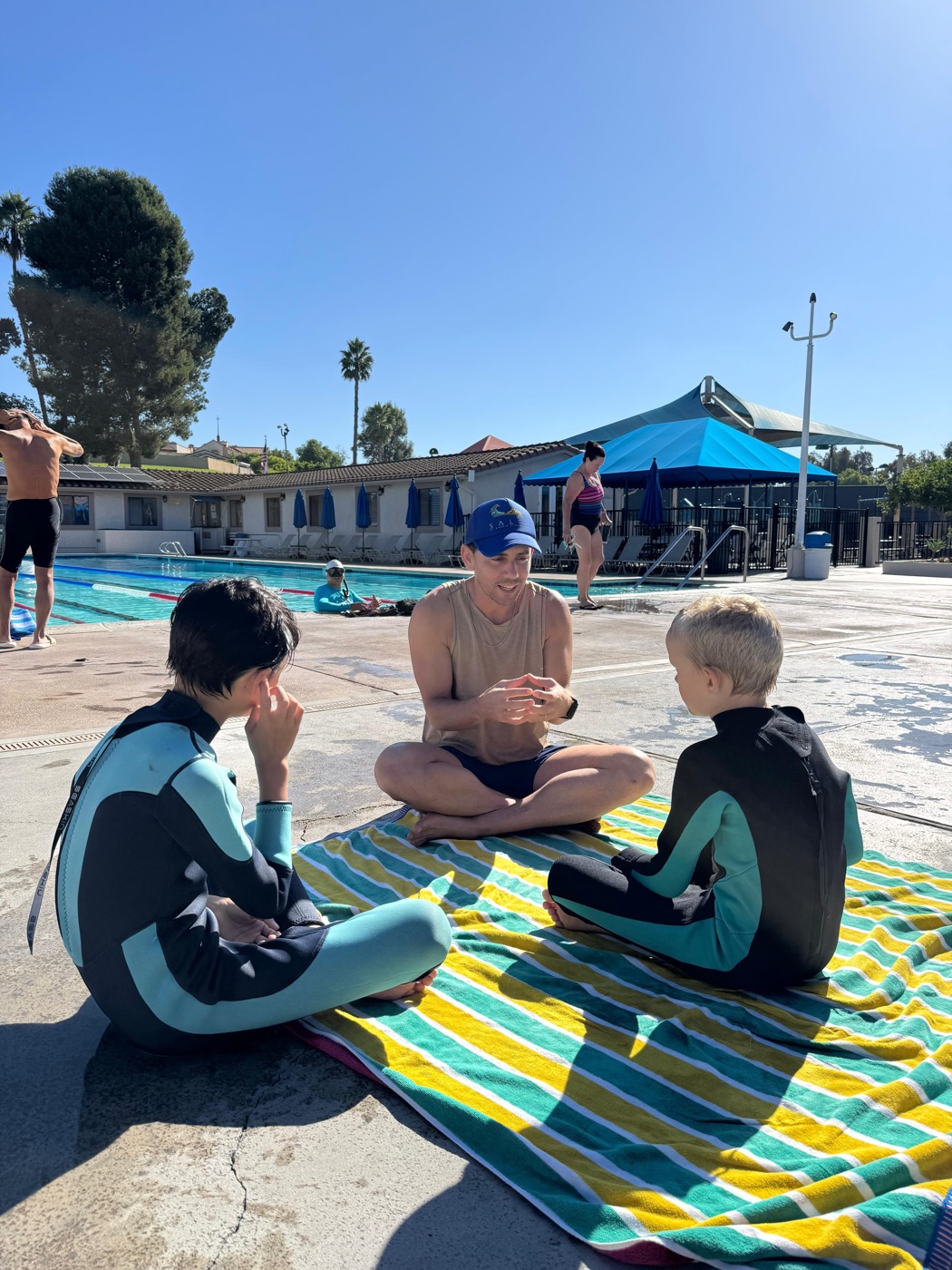
Teaching the dive reflex — it starts young
The Four Components
The dive reflex is an amalgam of four independent responses that work together to conserve oxygen and protect your vital organs during submersion. Each one is triggered by different stimuli, but together they form a coordinated survival system.
1. Bradycardia — Your Heart Slows Down
Within seconds of submerging your face in water while holding your breath, your heart rate drops. In untrained adults, the decrease is typically 10-25%. In elite freedivers, heart rate can drop by 50% or more — from a resting 60 beats per minute down to 30 or fewer.
This is mediated by the vagus nerve (cranial nerve X), part of the parasympathetic nervous system. The trigeminal nerve (cranial nerve V) detects water on the face — specifically the forehead, nose, and area around the eyes — and relays that information to the brainstem. The vagus nerve then signals the heart to slow down.
The purpose is straightforward: a slower heart consumes less oxygen. Less oxygen consumed means more oxygen available for the brain and other critical organs. It's your body shifting into power-saving mode.
Two things amplify the bradycardia response: cold water and actual breath-holding. Facial immersion alone triggers a mild response, but the full effect requires both cold water contact and apnea together. This is why face immersion in warm water produces less bradycardia than cold, and why simply holding your breath on land without face immersion produces a weaker response than doing both.
2. Peripheral Vasoconstriction — Blood Retreats to the Core
Simultaneously with the heart rate decrease, blood vessels in your extremities constrict. Blood is shunted away from your arms, legs, skin, and non-essential muscle groups and redirected to your core — specifically your heart, brain, and lungs.
This is driven by the sympathetic nervous system, the same system responsible for your fight-or-flight response. But instead of preparing you to run from a predator, it's preparing you to survive underwater. The result is a concentration of oxygenated blood in a "heart-brain circuit" — your body literally prioritizing the organs that matter most.
The vasoconstriction also raises blood pressure, which is part of why the bradycardia exists — the slower heart rate partially compensates for the increased pressure, preventing your cardiovascular system from being overwhelmed.
3. Blood Shift — Preventing Lung Collapse at Depth
Until the 1960s, physiologists believed humans couldn't freedive below 50 meters. The math seemed clear: at that depth, water pressure would compress the air in your lungs to a volume so small that the chest cavity would collapse inward. In 1961, Enzo Maiorca disproved this by freediving past 50 meters. Scientists were baffled.
The answer, discovered during studies on freediver Jacques Mayol in 1974, is the blood shift. As a freediver descends and the lungs compress under pressure, blood from the periphery fills the space that the compressed air vacates inside the chest cavity. The blood — being a liquid — cannot be compressed, so it acts as a hydraulic cushion, preventing the chest from collapsing.
This is directly linked to the peripheral vasoconstriction described above. The blood shunted from your extremities doesn't just sit idle — it flows into the pulmonary vasculature, engorging the blood vessels in your lungs and maintaining the structural integrity of your chest cavity at depth.
4. Splenic Contraction — Your Secret Oxygen Reserve
This is the component most people have never heard of, and it might be the most fascinating. Your spleen — a fist-sized organ behind your stomach that most people think of as vestigial — acts as a reservoir for red blood cells. It stores roughly 10% of your total red blood cell volume.
When you hold your breath and oxygen levels begin to drop, your spleen contracts in response to hypoxia and rising CO2, squeezing stored red blood cells into circulation. The result: an immediate increase in hemoglobin concentration and oxygen-carrying capacity of your blood. Research shows hemoglobin can increase by 3-5% from splenic contraction alone.
Studies on Weddell seals found that hemoglobin rose from 17.5 g/dL at rest to 21.9 g/dL after surfacing from a dive, with the spleen contracting to 71% of its resting size. In humans the effect is smaller but measurable — and it appears to be trainable. Elite freedivers and endurance athletes show larger spleens and more pronounced contraction responses than untrained individuals.
Interestingly, the spleen effect may explain why your later dives in a session often feel easier than your first few. The spleen doesn't fully contract immediately — it takes repeated apneas over 15-30 minutes for the full effect to kick in. This is one reason why proper warmup dives aren't just about equalization practice; they're priming your splenic response.
Training the Dive Reflex
The dive reflex is innate — every human has it from birth (infants actually have a stronger response than adults). But its intensity varies between individuals, and research suggests it can be enhanced through regular exposure.
The Sama-Bajau people of Southeast Asia, who have hunted underwater by breath-hold diving for centuries, show enlarged spleens and more intense peripheral vasoconstriction compared to non-diving populations — with evidence of natural selection for the genes controlling these adaptations. The Haenyeo women divers of South Korea demonstrate pronounced bradycardia and exceptional cold tolerance during breath-hold diving.
You don't need centuries of genetic adaptation to improve your dive reflex, but regular training matters. Here's what the research supports:
Face immersion practice. Even without full submersion, placing your face in cold water while holding your breath activates the reflex. Doing this regularly as part of dry training can strengthen the response over time.
Repeated apneas. Serial breath-holds with face immersion produce a cumulative effect. Each successive hold benefits from the ongoing splenic contraction and cardiovascular adjustments from previous holds.
Cold water exposure. Water below 21°C (70°F) produces significantly stronger cardiovascular responses than warm water. La Jolla's water, ranging from 56-72°F depending on season, is consistently cold enough to trigger a robust dive reflex.
Regular diving. Perhaps the most intuitive finding: people who dive frequently develop stronger dive reflexes. The more you practice, the more efficiently your body learns to shift into diving mode.
What This Means for Your Freediving
Understanding the dive reflex changes how you approach a dive. That first uncomfortable minute where everything feels wrong? That's your body transitioning from terrestrial mode to diving mode. The bradycardia hasn't fully kicked in. The vasoconstriction is still ramping up. Your spleen is just beginning to contract.
This is why we emphasize the breathe-up and relaxation before a dive. You're not just calming your mind — you're giving your body time to activate the physiological systems that will sustain you underwater. A calm, relaxed entry with face immersion before your duck dive gives the trigeminal nerve time to detect the water and initiate the cascade.
It's also why the first dive of a session is often the hardest. Your body hasn't fully transitioned yet. By the third or fourth dive, with the splenic contraction in full effect and the cardiovascular responses primed, the same depth feels noticeably easier.
The dive reflex is your body's 300-million-year-old answer to the question "how do I survive underwater?" You don't need to understand every neural pathway to benefit from it. But knowing it's there — knowing that your body is designed for this — changes something fundamental about how you relate to the water.
You're not fighting the ocean. You're remembering something your body has always known how to do.