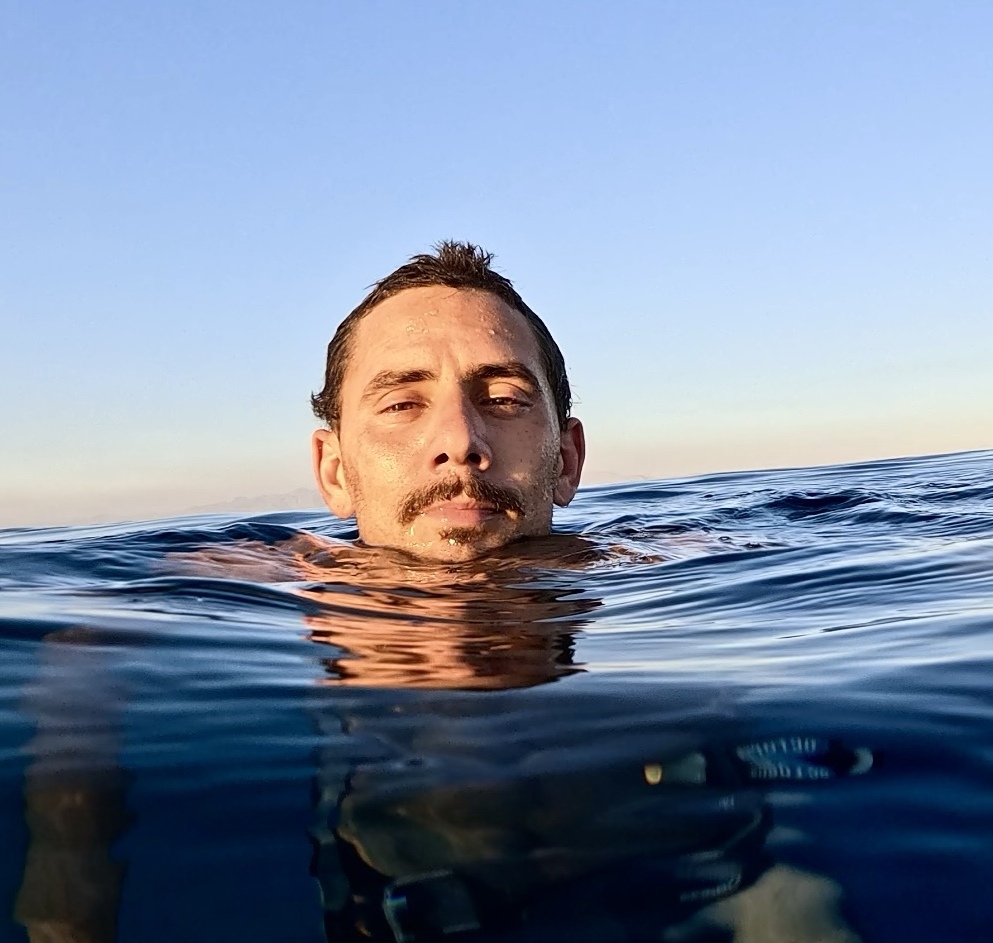
And yet — they are conscious, calm, often relaxed. They execute complex motor tasks. They make decisions. They ascend safely. Many describe the experience as among the most pleasant of their lives.
This is the deep dive paradox: a set of physiological extremes that would, in any other context, constitute medical crisis, yet produce a state that elite practitioners describe as restorative. Recent research suggests these conditions may not be merely tolerated by trained divers — they may be actively therapeutic, with applications for trauma, anxiety disorders, and neurological recovery.
This post is a synthesis of the current research, calibrated for the LJFC audience: divers who want to understand what the science actually shows about what happens in their bodies underwater, and what those mechanisms might mean beyond sport.
Standard safety disclaimers apply throughout. The protocols required to access these conditions safely require AIDA-level training and qualified supervision. Nothing in this post should be interpreted as recommendation to practice breath-hold diving outside that framework.
The mammalian dive response — what 'autonomic co-activation' actually means
The mammalian dive response was first systematically described in the 1930s but has only recently been understood at the neurological level. It begins with facial cold water contact triggering trigeminal nerve receptors, which signal the brainstem to initiate vagal activation. Heart rate drops by 30–50% in trained divers, with elite athletes reaching 20–24 beats per minute — comparable to seals and whales. This bradycardia occurs through muscarinic M2 receptor activation, dramatically reducing cardiac oxygen consumption.
Simultaneously — and this is the unusual part — the sympathetic nervous system constricts peripheral blood vessels. Peripheral vasoconstriction redirects 700–1000 mL of blood from limbs and organs into the thoracic cavity, protecting vital organs while allowing peripheral tissues to tolerate severe hypoxia. At depth, this blood shift becomes more pronounced, with up to 1000 mL filling the thoracic space to prevent lung collapse as ambient pressure compresses lung volume.
The result is a state where the parasympathetic ("rest and digest") and sympathetic ("fight or flight") nervous systems are simultaneously dominant. This co-activation is nearly unique to the dive response — most stressors activate one or the other. The implications matter because the parasympathetic dominance creates what researchers call a "safe internal state," while the sympathetic activation tags the experience as significant and worth encoding.
The spleen contracts early in this cascade, releasing concentrated red blood cells and increasing hemoglobin by 4–11%. Elite freedivers possess spleens averaging 336 mL compared to 215 mL in the general population. During apnea, these enlarged spleens contract by up to 50%, releasing 260 mL of oxygen-rich blood — equivalent to an extra 30 seconds of dive time. Research on the Bajau sea nomads of Southeast Asia revealed genetic variants in the PDE10A and BDKRB2 genes that regulate spleen size and diving reflex strength, demonstrating that centuries of subsistence diving created evolutionary selection pressure for these adaptations.
What happens to the brain at depth
Studies using arterial catheterization during maximal apneas revealed something unexpected: despite arterial oxygen dropping to 23–37 mmHg (oxygen saturation around 50%), cerebral oxygen delivery never falls below baseline. The brain compensates through massive vasodilation, increasing cerebral blood flow by 93–165% from resting values.
This cerebrovascular response operates through synergistic mechanisms. Severe hypoxia (oxygen below 30 mmHg) is the most potent cerebral vasodilator known, while elevated CO2 (reaching 50 mmHg) adds additional vasodilatory stimulus. The arteriovenous oxygen saturation difference decreases by 54–61% as the brain extracts every available oxygen molecule, yet cerebral metabolic rate remains stable throughout apnea.
Elite freedivers demonstrate even more extreme adaptations. University of St Andrews research found that divers reaching 107 meters had brain oxygen levels lower than seals during their deepest dives, dropping to just 25% of normal levels. Yet these divers maintained consciousness, executed complex motor tasks (equalization, swimming, safety protocols), and ascended successfully. This suggests profound cerebrovascular plasticity exceeding anything previously documented in non-aquatic mammals.
Recent neurosurgical discoveries revealed a paradoxical role for the amygdala in breath-holding. Contrary to traditional fear models, patients with bilateral amygdala damage experienced excessive panic when exposed to CO2, while electrical stimulation of intact amygdalae induced 40–56 second apneas without awareness or distress. The amygdala possesses strong GABAergic (inhibitory) projections to brainstem respiratory centers and central chemoreceptors, effectively suppressing suffocation alarms during voluntary breath-holds.
During freediving, this amygdala-mediated inhibition allows tolerance of extreme hypercapnia without panic. Elite freedivers can suppress the CO2 stimulus to breathe through both psychological training and adaptive blunting of chemoreceptor sensitivity. This creates a state where divers tolerate arterial CO2 levels that would cause unbearable air hunger in untrained individuals — a useful capacity in sport, and a potentially valuable one in therapeutic contexts.
The neurochemical cascade
Neurotransmitter changes during freediving contribute to what divers experience as altered consciousness. The research describes:
- Beta-endorphin release during the physical stress of breath-holding, providing natural analgesia for diaphragmatic contractions and creating euphoric states.
- Dopamine surges with goal achievement and novelty, reinforcing diving behavior.
- Norepinephrine and epinephrine elevation from cold water exposure, enhancing alertness and memory consolidation.
- Serotonin stabilization of mood.
- Mild hypercapnia (5% CO2) suppressing cerebral metabolic rate by 13.4%, reducing default mode network activity, and shifting EEG toward lower frequencies indicating reduced arousal — a quiescent state resembling meditation.
These combined changes create what freedivers describe as profound relaxation, heightened sensory awareness, time distortion, and flow states — experiences with phenomenological overlap with meditation and certain altered states documented in contemplative-science research. We covered some of the meditation parallels in what Buddhist monks and freedivers have in common.
Why cold water amplifies the effect
The therapeutic potential isn't just about breath-holding. Cold water immersion alone produces powerful vagal activation through the trigeminal-vagal reflex arc. The Cold Face Test — where subjects immerse their face in 10°C water — triggers bradycardia with onset at 5.6 seconds and peak at 35.8 seconds. Studies show that vagal activation before acute stressors reduces physiological stress responses, with heart rate variability measures (RMSSD, pNN50) improving significantly.
Cold exposure creates sustained neurochemical changes distinct from the transient effects of exercise or stress. Dopamine elevations reach 250% of baseline and persist for hours post-immersion, while norepinephrine increases enhance alertness without anxiety when contextualized as adaptive stress. The Wim Hof Method, combining cold exposure with breath-hold training, produced remarkable results in controlled trials: practitioners injected with E. coli bacteria showed 50–60% reduced symptoms compared to controls, demonstrating conscious immune system modulation through vagal anti-inflammatory pathways.
Comparative research demonstrates water's unique advantages over land-based practices. Face immersion produces 57% greater bradycardia than dry breath-holds (33% versus 21% heart rate reduction). Full-body immersion adds hydrostatic priming that enhances subsequent diving reflex activation, with greater synchronization between parasympathetic and sympathetic systems. Thermoneutral water (35°C) extends breath-hold duration by 20.3% through delayed CO2 buildup, while cold water (10°C) creates stronger diving reflex despite shorter durations due to metabolic costs of thermoregulation.
Clinical evidence — where the research currently stands
Clinical evidence for cold water therapy spans multiple conditions. A 2023 study of 111 veterans receiving trauma-informed aquatic therapy over 8–10 weeks found PTSD symptom scores (PCL-M) decreased from 56.2 to 39.3 — a mean reduction of 14.4 points, p<0.001 — with 64% showing ≥10 point improvement. The 77.5% completion rate demonstrates high acceptability compared to traditional exposure therapies.
Breath-hold training offers accessible therapeutic interventions without water immersion. CO2 tolerance building through progressive breath-hold tables reduces anxiety symptoms by desensitizing fear/panic circuits closely connected to respiratory centers. Research shows breathing practices reduce stress more effectively than mindfulness meditation for mood improvement, with cyclic sighing (extended exhales) proving most effective. The neurochemical effects include increased dynorphin (endogenous opioid) which enhances endorphin receptor sensitivity, creating post-practice euphoria.
Intermittent hypoxic training, where controlled breath-holds induce mild oxygen reduction, triggers adaptive responses with potential neuroprotective benefits. Groundbreaking Nature Communications research demonstrated that cognitive challenge induces localized hippocampal hypoxia, enhancing erythropoietin (EPO) expression and promoting neurogenesis. Single-cell sequencing revealed rapid increases in newly differentiating neurons with enhanced dendritic spine densities. Brain-derived neurotrophic factor (BDNF) elevates during breath-hold practice, critical for forming new neural connections and strengthening existing ones, particularly beneficial for memory consolidation and learning.
The neuroplasticity window
The most speculative — and most interesting — research thread connects the diving environment to memory reconsolidation. Memory reconsolidation research demonstrates that retrieved memories become temporarily labile for 4–6 hours after activation, during which new experiences can permanently modify emotional learnings. This process requires a prediction error: contrast between the existing memory and contradictory present experience.
The diving environment provides multiple elements supporting this reconsolidation window. Cold-induced norepinephrine elevation enhances memory consolidation through well-established neurochemical pathways. The dopamine surge from novel aquatic experiences supports new learning integration. Reduced cortisol from parasympathetic dominance prevents interference with consolidation processes. The altered state of consciousness — with reduced default mode network activity similar to meditation — may facilitate access to emotional memories while reducing cognitive defenses against reprocessing.
Environmental enrichment research shows that novel, complex, multisensory environments enhance neuroplasticity through multiple mechanisms. Water immersion provides temperature variations, pressure gradients, buoyancy, viscosity, and vestibular stimulation simultaneously — a more enriched sensory environment than any land-based setting. Studies demonstrate that aquatic environmental enrichment increases BDNF expression, enhances c-fos neural activity markers in telencephalic regions, elevates hippocampal neurogenesis, and improves synaptic plasticity.
Hyperbaric oxygen therapy (HBOT) research provides comparative insight. Protocols using 1.5–2.4 atmospheres of pressure while breathing pure oxygen activate both oxygen-sensitive and pressure-sensitive genes (p21, Bax). The "hyperoxic-hypoxic paradox" describes how intermittent fluctuations induce regeneration pathways without hazardous sustained hypoxia. While HBOT maintains elevated oxygen unlike freediving's hypoxia, both involve pressure-induced cerebrovascular changes and potential activation of mechanosensitive pathways. The question remains whether freediving's unique profile — combining pressure with hypoxia rather than hyperoxia — might trigger distinct neuroplastic mechanisms.
Safety boundaries — the necessary qualification
Clinical application of diving physiology requires rigorous attention to safety boundaries, because the same conditions enabling therapeutic effects pose significant risks. Shallow water blackout represents the primary danger at 20–30 meters, occurring through two mechanisms: ascent-induced hypoxia and hyperventilation-induced hypocapnia. Research shows oxygen saturation drops more rapidly during ascent from deep dives, averaging 73% after 35+ meter dives versus 84% after 10–25 meter dives.
Depth-specific risk profiles for the therapeutic-window range:
At 20 meters (65 feet, 3 ATA)
Lung volume compressed to 33% of surface, nitrogen partial pressure tripled, moderate oxygen consumption from swimming effort. Primary risks: hypoxic blackout on ascent and nitrogen loading with repetition. Lung squeeze risk remains low for single dives but increases with repetitive diving or poor technique. Recommended maximum: 20–25 dives per session with proper surface intervals.
At 30 meters (98 feet, 4 ATA)
Lung volume compressed to 25% of surface (at or near residual volume for most divers), nitrogen partial pressure quadrupled, blood shift mechanism fully activated. All risks significantly elevated, with average oxygen saturation upon surfacing measured at 70–75% in studies. Lung squeeze risk moderate to high, particularly with movement or contractions at depth. Recommended maximum: 10–15 dives per session with 8–10 minute surface intervals, oxygen supplementation considered.
Surface interval requirements follow the general rule that recovery time should equal twice the dive duration. AIDA International guidelines specify surface intervals in minutes equal to depth in meters divided by 5 for 20–30 meter dives. Conservative protocols recommend 8–10 minute minimum intervals for all dives exceeding 25 meters.
Nitrogen loading with repetitive dives presents real decompression risk contrary to historical belief. Systematic review identified 44 cases of decompression illness in breath-hold divers, primarily affecting the central nervous system. Case studies document transient aphasia and brain lesions after 30 dives to ~30 meters over 5 hours with short intervals. The "Taravana syndrome" in Polynesian pearl divers represents decompression-like illness from repetitive 30–40 meter dives with insufficient surface intervals.
Any therapeutic application must include:
- Never practice breath-holds alone, especially in water — trained safety personnel mandatory
- Gradual depth progression over months (add 1–2 meters per week maximum)
- Systematic warm-up protocols (10–15 minutes including diaphragm/chest stretching)
- Proper hydration before, during, and after sessions
- Emergency oxygen equipment available and personnel trained in rescue procedures
- Medical screening for cardiovascular conditions, Raynaud's disease, and contraindications (see AIDA International standards)
- Recognition training for hypoxia warning signs: tunnel vision, confusion, erratic movements, failure to complete surface protocol
- Immediate cessation and medical evaluation after any blackout, loss of motor control, or hemoptysis
What this means for practice
For practicing freedivers, the research suggests several actionable implications:
The benefits compound with training. Longitudinal studies show 2 weeks of daily breath-hold training improves diving response onset, reduces oxygen desaturation, and extends duration. Years of practice produce cerebrovascular reactivity increases allowing 107–165% cerebral blood flow elevations, spleen size and contraction enhancement providing 30-second performance gains, and lung volume increases through stretching (0.5L gain from 11-week programs). These adaptations persist with continued practice.
The surface interval after a dive may matter as much as the dive itself. If the 4–6 hour memory reconsolidation window is real, what you do in the hours after a session may compound the neuroplastic effects. Maintaining the relaxed, parasympathetic state — rather than rushing back to high-stimulus activity — may enhance whatever consolidation is occurring.
Cold exposure adds to breath-hold benefit, not in place of it. The combination of cold + apnea + pressure appears to be synergistic rather than redundant. Each adds distinct mechanisms.
The therapeutic claims remain speculative. Despite compelling mechanistic plausibility, no controlled trials have directly tested freediving as a treatment for trauma or anxiety disorders. The 2023 veteran trial used aquatic therapy generally, not depth diving. Anyone using freediving for psychological benefit should do so as a complement to evidence-based care, not as a replacement.
The honest summary
The deep dive paradox is real, well-documented, and physiologically interesting. The mechanisms by which freediving at 20–30 meters produces simultaneous parasympathetic dominance and sympathetic activation, dramatic cerebrovascular vasodilation, and neurochemical cascades are now described in considerable detail across the research literature.
Whether these mechanisms can be harnessed therapeutically — for trauma, anxiety, neurological recovery, or general resilience — remains an open question. The mechanistic plausibility is strong. The clinical evidence is partial and indirect. The next decade of research will likely clarify which of these applications survive controlled trials.
For the practicing freediver, the takeaway isn't that diving is therapy. The takeaway is that the practice you've already committed to engages physiological systems that are doing more than getting you to depth and back — they're remodeling autonomic regulation, cerebrovascular plasticity, and stress response in ways that compound over time. The breath-hold training you're doing for sport is also, incidentally, training systems that matter outside the water.
For the freediver curious about the science, the references below are the entry points.
Sources and references
- The Deep Dive Paradox: Extreme Neurophysiology at Depth and Therapeutic Applications — research synthesis white paper (October 2025), the primary source for this post.
- Neurophysiological Mechanisms of Depth, Breath, and Memory: A White Paper on Therapeutic Applications of Freediving Physiology and CO2 Modulation.
- Patrician, A., et al. (2021). Cardiovascular response in breath-hold diving.
- D'Antoni, et al. (2022). Freediving neurophysiology research.
- Pique, et al. (2024). Recent freediving research.
- Steinberg, F., et al. "Electroencephalographic alpha activity modulations induced by breath-holding in apnoea divers and non-divers." ScienceDirect.
- Lutz, A., et al. (2008). "Attention regulation and monitoring in meditation." Trends in Cognitive Sciences.
- Royal Society Open Science research on extreme freediving depth and cerebral oxygen.
- University of St Andrews research on 107m freediving brain oxygen.
- Nature Communications research on hippocampal hypoxia and neurogenesis.
- 2023 veteran trial of trauma-informed aquatic therapy (PTSD-PCL-M outcomes).
- AIDA International course standards — for safety protocols and depth guidelines.
- DAN (Divers Alert Network) — for emergency procedures.
- LJFC: What Buddhist Monks and Freedivers Have in Common — companion piece on the meditation parallels.
- LJFC: The Mammalian Dive Reflex — the foundational mechanism.
- LJFC: What Happens to Your Body During a Freedive — physiology primer.