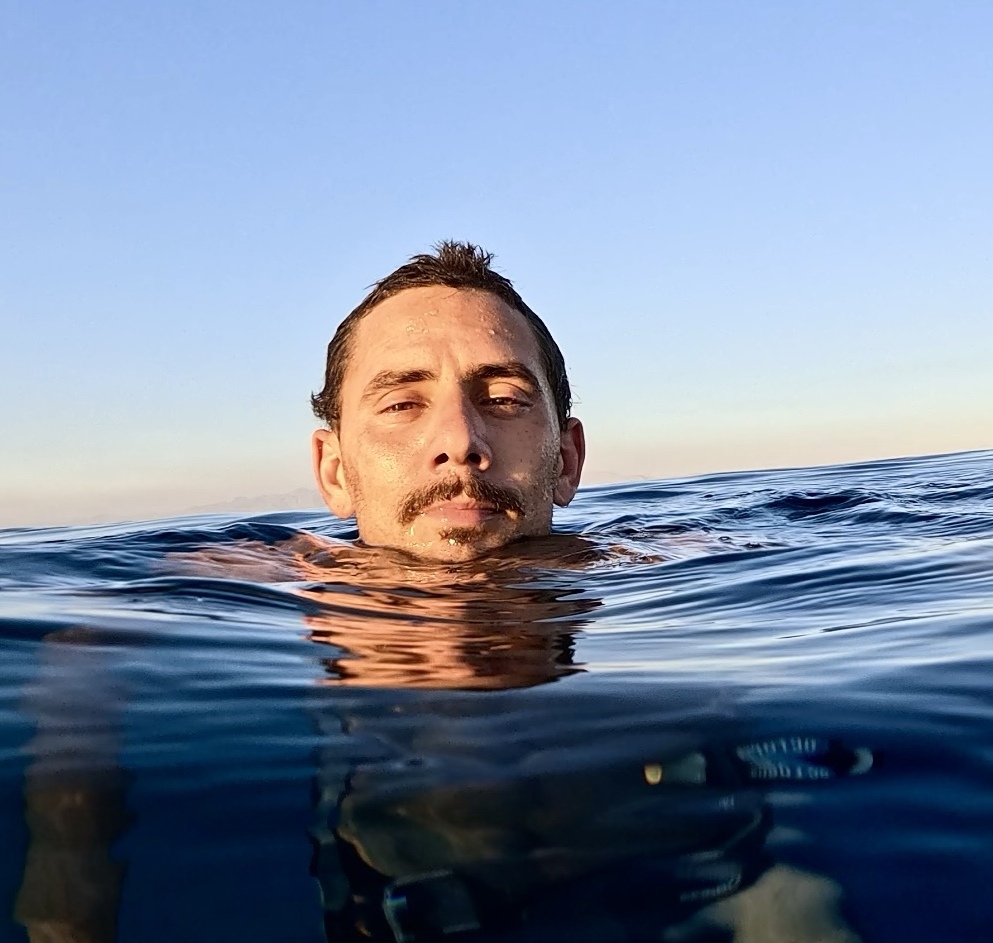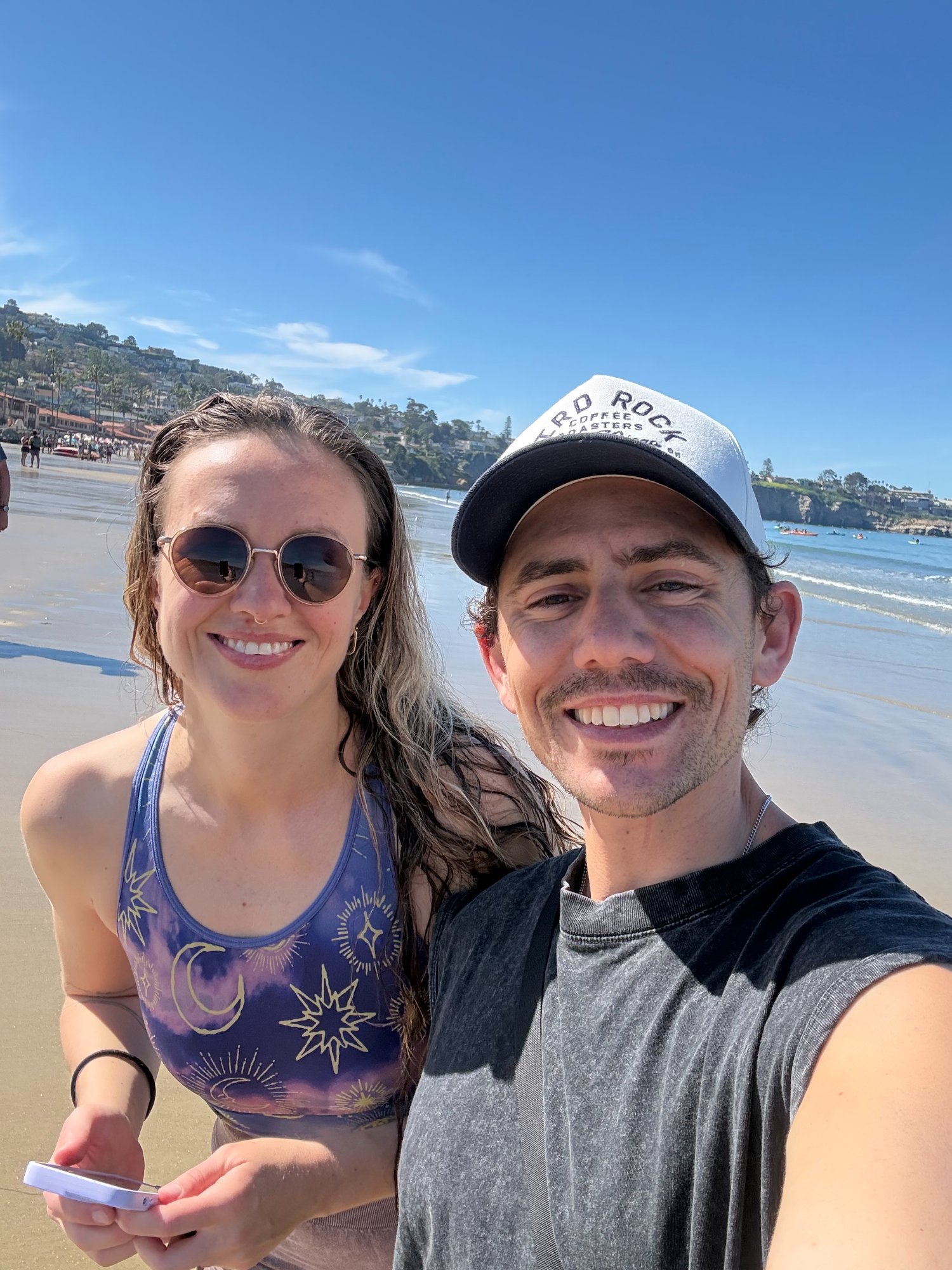
For a freediver, the Shores offers an unusual combination: shallow, safe entry conditions for confined-water work and beginner sessions, and deep, structured underwater terrain for intermediate and advanced training within the same dive site. There are not many places in the world where this is true.
This guide is a year-round breakdown of conditions, dive sites, seasonal patterns, and the practical knowledge that separates a freediver who comes to La Jolla Shores once from one who actually trains there.
The geography in one paragraph
La Jolla Shores is the protected southern end of a longer beach that runs north from Scripps Pier to the rocky cliffs at La Jolla Cove. The Shores section itself is sandy bottom for the first 100 meters offshore, then transitions to a mix of sand, scattered reef, and the southern edge of the La Jolla Underwater Park (a protected marine reserve). Beyond the reef, the bottom drops away into the La Jolla Submarine Canyon — a deep-water feature that pulls cold, clean water close to shore and creates the depth profile that makes the site useful for serious freediving.
The LJFC mooring line sits at the canyon edge, roughly 500 meters offshore from Kellogg Park, at 32.856746, -117.262603. Bottom depth at the mooring is approximately 35–40 feet (10–12 meters), with the canyon dropping away to 70+ feet (20+ meters) just beyond.
Water conditions, year-round
San Diego coastal water is dominated by two patterns: seasonal upwelling and the California Current. Both produce the cold, nutrient-rich conditions that make the kelp forests thrive — and that make the water reliably colder than visitors expect.
Temperature by month
| Month | Surface temp range | Notes |
|---|---|---|
| Jan | 57–60°F | Coldest month, often clearest vis |
| Feb | 56–60°F | Often the bottom of the temp curve |
| Mar | 58–62°F | Spring upwelling can drop temps locally |
| Apr | 60–64°F | Warming begins |
| May | 62–66°F | "May gray" cloud cover, calmer surface |
| Jun | 64–68°F | "June gloom" continues; great early-morning conditions |
| Jul | 66–70°F | Warmest period begins |
| Aug | 68–72°F | Peak summer temps; best vis windows |
| Sep | 67–71°F | Often the best month of the year for vis + temp combination |
| Oct | 64–68°F | Lobster season opens; cooling begins |
| Nov | 61–65°F | Calmer surface, longer dive times feel work |
| Dec | 58–62°F | Heavier wetsuit required |
The takeaway: a 5mm wetsuit handles the entire year. A 3mm works for July–September. Most local freedivers run a 5mm year-round and add a hood and gloves for the winter months.
Visibility
Visibility at the Shores ranges from 5 feet (rare, after heavy rain) to 40+ feet (occasional, in late summer). The annual average sits around 15–20 feet. Two patterns matter:
- Plankton blooms reduce vis from spring through early summer. The cold nutrient-rich upwelling water that brings life to the kelp also fills the water column with microorganisms that scatter light.
- Late summer through early fall tends to produce the clearest water. The upwelling weakens, the surface warms, and the bloom subsides. August through October is when most local divers get their best vis days.
Rain events drop vis temporarily — typically 24–72 hours after significant rainfall, then recovery. Avoid diving for at least 24 hours after major storms; runoff from the canyon brings bacteria and debris.
Swell and surf
The Shores is protected from west and northwest swells by the Point Loma peninsula. South swells wrap around the headlands but are dissipated by the time they reach the beach. The result is a surf zone that's usually small — knee to waist high — and a long-period south swell that produces glassy mornings throughout summer.
Winter brings larger northwest swells. When the buoy at NDBC 46254 reads 6+ feet, surf at the Shores can be unmanageable for safe entry. Use the live conditions page at lajollafreediveclub.com/conditions or check NDBC directly before driving down.
Wind
Late morning sea breeze dominates almost year-round. Mornings — sub-dawn through 9 or 10 AM — are reliably calm, often glassy. By 2 PM most days, the onshore wind is 10–15 knots, kicking up chop and reducing surface comfort. Plan ocean sessions for the morning whenever possible. We covered this in detail in our 4-week AIDA 2 prep plan — early starts compound.
The dive sites within the Shores
There are three meaningfully different dive sites within walking distance of the Shores parking lots.
1. The shallow Shores (south end, near the Beach & Tennis Club)
Sandy bottom, 5–15 feet deep, almost no current. This is the area we use for confined-water sessions during AIDA 2 courses when surf is small. Sea life is limited — sand dollars, occasional bat rays, a few halibut. But for shallow training, equalization practice, and beginner work, it's an excellent low-stakes environment.
2. The Kelp Forest (east of the LJFC mooring)
The bulk of the dive site. 20–40 foot bottom, dense kelp canopy in summer (thinner after winter storms), garibaldi (the namesake fish), leopard sharks in summer, sheephead, kelp bass, the occasional sea lion, and bat rays. The kelp forest is the main attraction for visiting divers — California's kelp forests are among the densest and most photogenic in the world.
3. The Canyon Edge (LJFC mooring line and beyond)
The serious freediving site. The canyon drops away from 40 feet to 70+ feet over a short horizontal distance. The wall is structured, with ledges and overhangs. Cooler water sits at depth — typically 5–10°F colder than the surface. This is where AIDA 2 cert dives happen, where AIDA 3 training takes place, and where the deeper Saturday Sessions are run.
The canyon edge requires a lanyard and dive computer if you're training there outside of an instructor-led session.
Season-by-season — what to expect and what to target
Spring (March–May)
Cold water, often poor vis from upwelling-driven blooms. Surf can be moderate to large depending on north swell activity. This is the hardest season to train at the Shores. Most local freedivers reduce their water time in spring and use the season for dry training, stretching, and CO2 tables. If you do dive, target morning windows and accept that vis may be 10 feet or less.
What's worth doing: shallow confined-water work in the south end, equalization practice (which doesn't need vis), and dry-land cold acclimation in preparation for summer.
Summer (June–August)
The season most divers come for. Warmer water, longer days, generally good vis windows, lighter wetsuits. The marine layer ("June gloom" / "May gray") produces glassy mornings and reduces afternoon wind on many days.
What's worth doing: AIDA 2 and 3 courses, depth training at the canyon, kelp forest dives, the leopard shark season in late July through September.
Fall (September–November)
Often the best time of year. September water is typically the warmest of the year (it lags air temp), vis is at its annual peak, and the surf is moderate. October opens lobster season for spearos.
What's worth doing: peak depth training, photography (best vis windows), late-season courses, the start of lobster diving for certified spearos.
Winter (December–February)
Cold, sometimes choppy, but the clearest water of the year on calm days between storms. The water temperature is the limiting factor for most students — diving for an hour in 58°F water requires a proper 5mm wetsuit, hood, and gloves to stay comfortable.
What's worth doing: take advantage of the clear-water windows; you'll see structure on the bottom you can't see in summer. Many local divers prefer winter for canyon work because the cold deep water comes shallower and you see the contour better.
Practical access
Parking: Kellogg Park is the standard entry. Pay-by-plate lot starting at 8 AM. Arrive early on summer weekends — the lot fills by 10 AM in peak season. Free street parking is available on Camino Del Oro and the surrounding residential streets if you don't mind a 5-minute walk.
Entry point: Walk south from the Beach & Tennis Club. Surf is smallest at the south end of the beach. Enter on a calm period between sets, fins in hand until you're knee deep, then fins on.
Lifeguards: Tower staffed during daylight hours, year-round. They're aware of freediving and supportive, but they're not specifically trained in freediving emergency response — assume your buddy is your primary safety, not the tower.
Showers: Available at the lifeguard tower and at Kellogg Park. Cold water only at the tower; the Park has small change rooms.
Cell coverage: Good throughout the Shores. Useful if you need to call out, but no emergency-only freediving response — call 911 for any in-water emergency.
Nearest hospital: UCSD Medical Center (Hillcrest or La Jolla Jacobs Medical Center), 10–15 minutes by car. Nearest hyperbaric chamber is at UCSD.
What to avoid
A handful of conditions that should reliably trigger a no-go decision:
- Surf above 4 feet at the buoy. Manageable for experienced ocean swimmers but not for confined-water work. Cancel or relocate.
- Strong onshore wind early. If the morning is already chopping up at 6 AM, the surface conditions won't improve. Reschedule.
- Heavy rain in the last 24 hours. Runoff brings bacteria, sometimes algal blooms, and pulls debris into the water column. Wait 48 hours after major storms.
- Red tide / algal bloom warnings. Visible discoloration of the water typically indicates a bloom. Diving through these isn't dangerous but it's miserable, and may cause respiratory irritation.
- Strong south swell into a north wind. Produces confused chop that makes surface work hard. The conditions page at lajollafreediveclub.com/conditions tracks this.
The community at the Shores
There's an informal community of freedivers, spearos, and scuba divers who use the Shores regularly. On any given Saturday morning you'll see groups setting up at the lot, briefing on the sand, and entering the water in pairs. The community is friendly and informal — if you see another freediver doing what you're doing, they're usually happy to talk shop.
LJFC runs Saturday Sessions at the Shores every weekend, year-round. The session is open to certified freedivers with their own gear and a dive computer. Free for Ocean Flow members, $25 drop-in. It's the easiest way to dive at the canyon mooring with a community of safety divers and structured training.
The case for La Jolla Shores as a training site
Most freediving destinations are either: warm, deep, and far away (Dahab, Cyprus, Roatán, the Philippines); or shallow, cold, and close to home for most North American divers (lakes, quarries, swimming pools). La Jolla Shores is the rare site that offers both deep, structured terrain and same-day accessibility for anyone in Southern California.
For a serious freediver building toward AIDA 3, AIDA 4, or competitive depth, the canyon edge is a legitimate training environment. For a beginner working toward AIDA 2, the shallow south end is an ideal confined-water alternative to a pool. The fact that both exist at the same site, with the same drive and the same parking lot, is what makes the Shores work as a year-round training site rather than a one-off destination.
Sources and references
- NDBC 46254 (Scripps Nearshore Waverider) — primary source for wave height and water temperature data
- NOAA CO-OPS Station 9410230 — La Jolla tide predictions
- NWS Marine Forecast Zone PZZ740 — coastal marine forecast for San Diego County waters
- California Department of Fish and Wildlife — La Jolla Underwater Park information
- LJFC: Live conditions page — daily updated dive grade and current readings
- LJFC: 7-day tide calendar — best dive windows by tide
- LJFC: Underwater field guide — 10 dive sites, 8 depth zones, 50+ species
- LJFC: 5 Best Freediving Spots in San Diego
- LJFC: Beginner's Guide to Freediving in La Jolla